

In today’s evolving workplace, conversations around safety, dignity, and respect are no longer optional. Organizations are increasingly recognizing that a productive workplace is not just about performance and profitability, but also about ensuring that every individual feels secure and valued. This is precisely the purpose behind the Sexual Harassment of Women at Workplace (Prevention, Prohibition and Redressal) Act, 2013.
The POSH Act was enacted to provide a robust legal framework for preventing and addressing sexual harassment at the workplace. While many employees are aware that the law exists, there is often limited understanding of some of its most important provisions. Terms such as employee, employer, aggrieved woman, and especially workplace are much broader than most people imagine. Understanding these definitions is essential because they determine who is protected under the law and where those protections apply.
The Objectives of the POSH Act
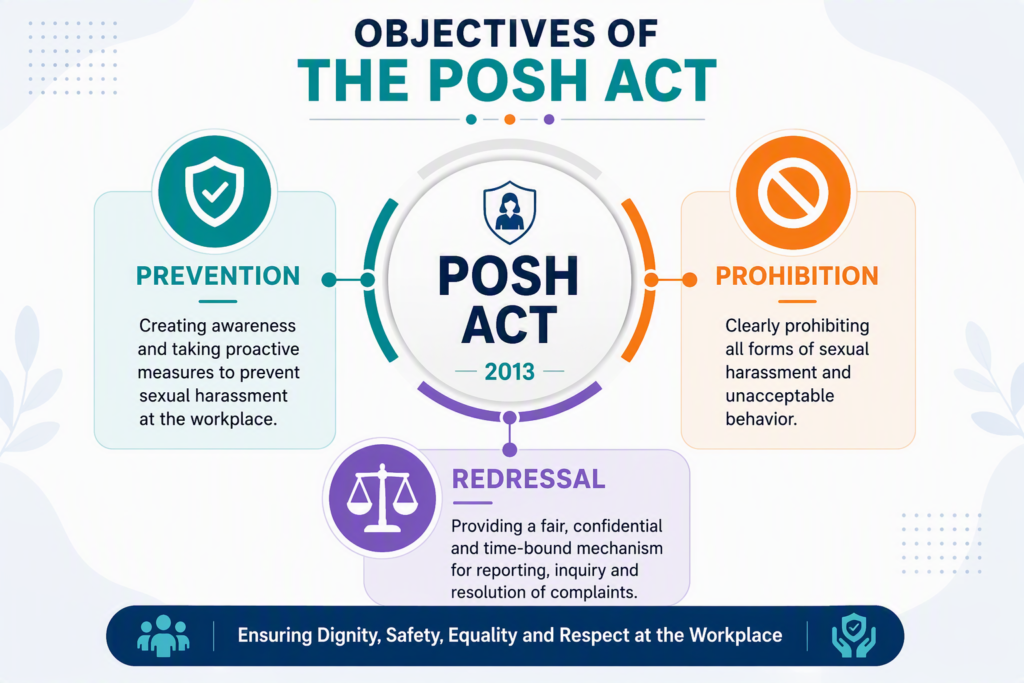
The core objective of the POSH Act is embedded within its name itself: Prevention, Prohibition, and Redressal. The law seeks not merely to respond to incidents of sexual harassment after they occur, but also to create awareness and systems that prevent such behavior from arising in the first place. It aims to foster workplaces where women can work with dignity, equality, and confidence, freedom from fear, intimidation, or discrimination.
The Act is grounded in the principles of equality and dignity guaranteed under the Constitution of India. It recognizes that sexual harassment is not simply inappropriate behavior; it is a violation of a woman’s fundamental rights. By mandating preventive measures, establishing redressal mechanisms, and holding employers accountable, the law seeks to create workplaces that are safe, inclusive, and respectful for all.
Who is Considered an Employee Under the POSH Act?
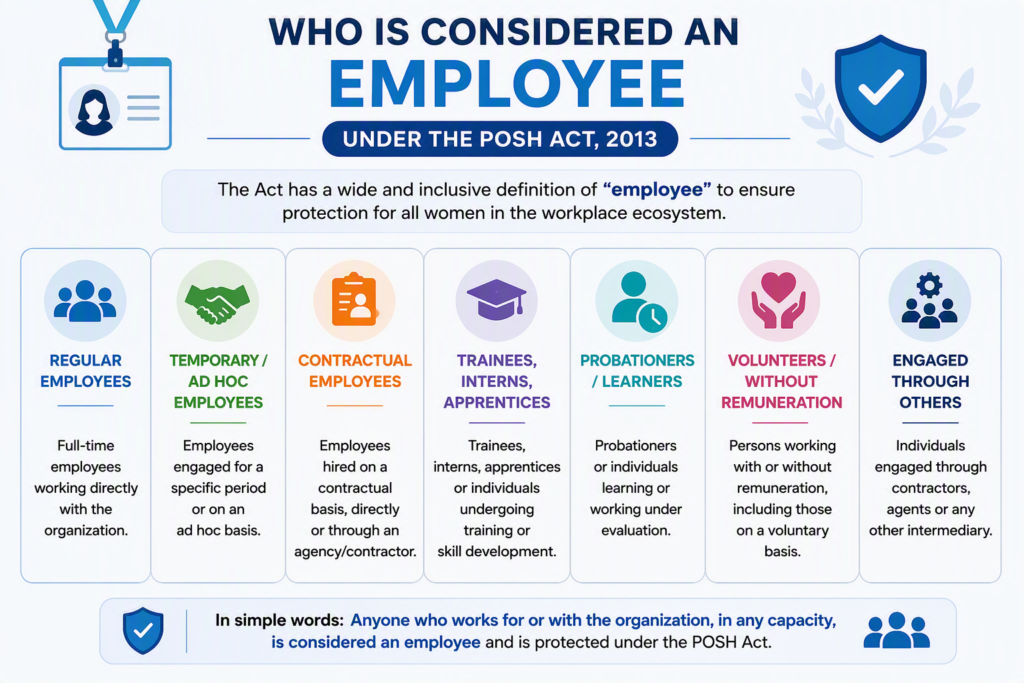
One of the most progressive aspects of the POSH Act is the way it defines an employee. Many people incorrectly believe that the law only protects permanent staff members who receive a salary directly from the organization. In reality, the definition is intentionally broad so that protection is not limited by the nature of employment.
Under the Act, an employee may include a regular employee, a temporary worker, an ad hoc employee, a contractual resource, a trainee, an apprentice, an intern, a probationer, or even an individual working on a voluntary basis. The law also covers people engaged through contractors, agencies, or intermediaries, regardless of whether they receive direct remuneration from the organization.
This broad scope is important because modern workplaces are far more diverse than traditional employment models. Organizations today rely on consultants, outsourced teams, freelancers, interns, and contract workers. The POSH Act ensures that all such individuals receive protection and are not excluded simply because they are not permanent employees. The emphasis is on the existence of a work relationship rather than the type of contract.
Who is Considered an Employer?
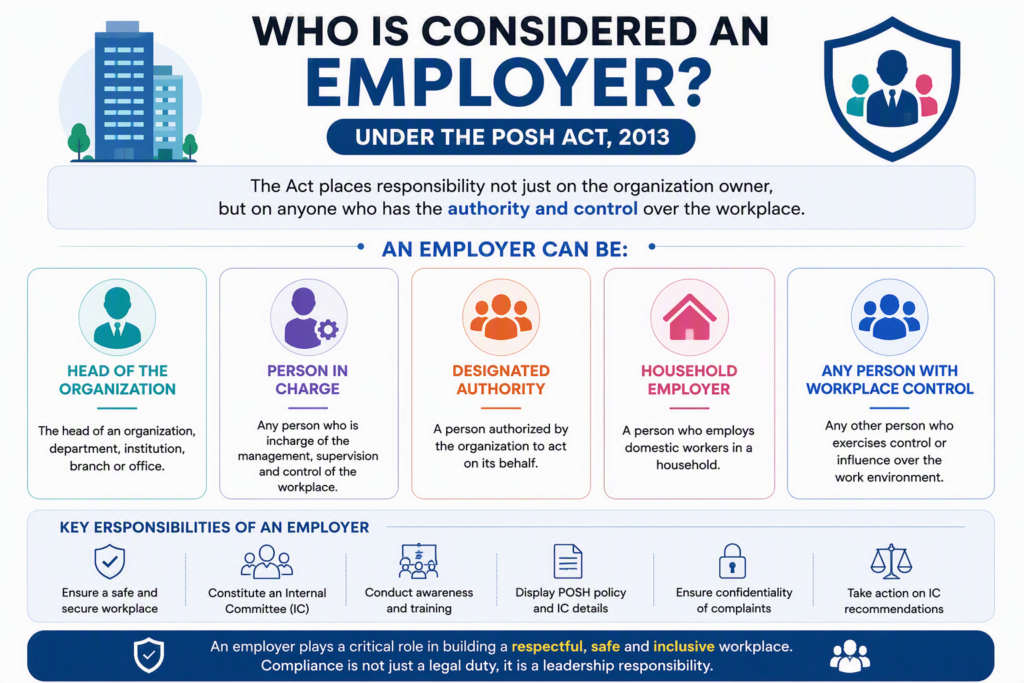
The responsibilities under the POSH Act do not rest solely with company owners or CEOs. The law defines an employer as any person responsible for the management, supervision, and control of a workplace. Depending on the nature of the organization, this may include the head of a department, the head of an institution, a branch manager, an authorized officer, or any individual entrusted with workplace administration.
The definition is intentionally comprehensive because the Act places significant responsibility on employers. They are required to create a safe working environment, establish an Internal Committee (IC), conduct awareness programs, communicate policies, support fair investigations, and ensure that complaints are addressed in a timely and confidential manner. Failure to fulfill these obligations can attract penalties and legal consequences.
Beyond legal compliance, employers play a critical role in shaping workplace culture. A written policy alone cannot create a respectful workplace. Leadership commitment, awareness initiatives, and consistent action are equally important in ensuring that the objectives of the POSH Act are achieved in practice.
What is a Workplace Under the POSH Act?
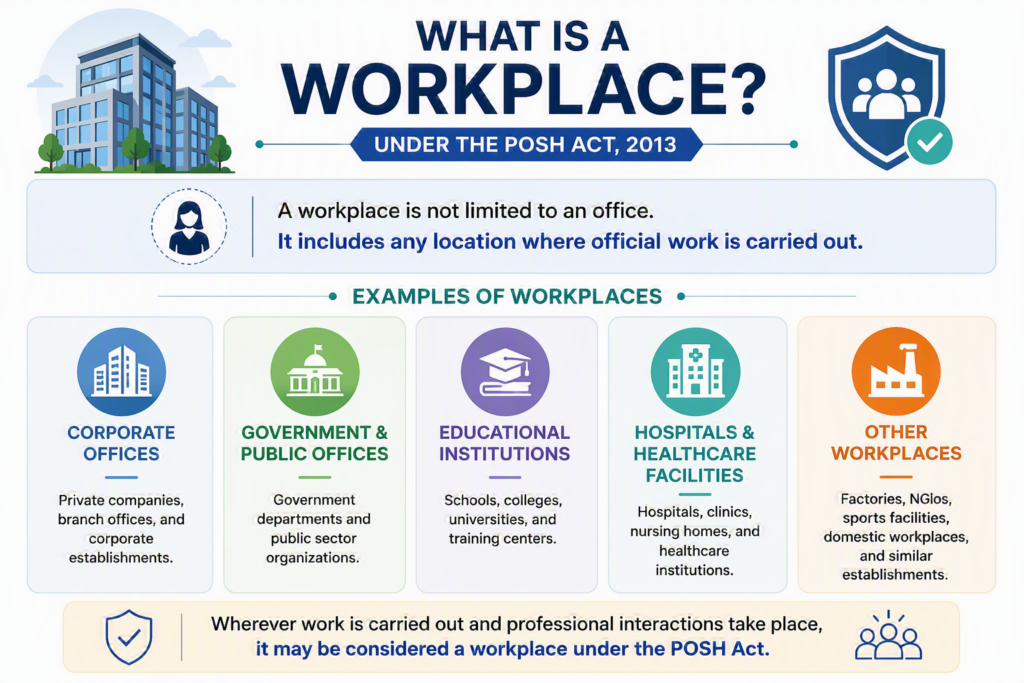
When people hear the word “workplace,” they often think of a physical office building. However, one of the most important and frequently misunderstood aspects of the POSH Act is its expansive interpretation of what constitutes a workplace. The law recognizes that work is no longer confined to a desk, a cabin, or an office floor.
A workplace may include government offices, private organizations, educational institutions, hospitals, clinics, training centers, sports institutions, NGOs, factories, and even domestic workplaces in certain circumstances. In other words, the law covers virtually every setting where professional duties are performed.
As work practices have evolved, the concept of workplace has expanded beyond physical locations. Today, meetings conducted through virtual platforms, work-related interactions on messaging applications, and communications through official collaboration tools can also come within the ambit of workplace interactions. The focus is not merely on the location but on the connection to professional activity.
The Extended Workplace: The POSH Provision Many People Are Unaware.
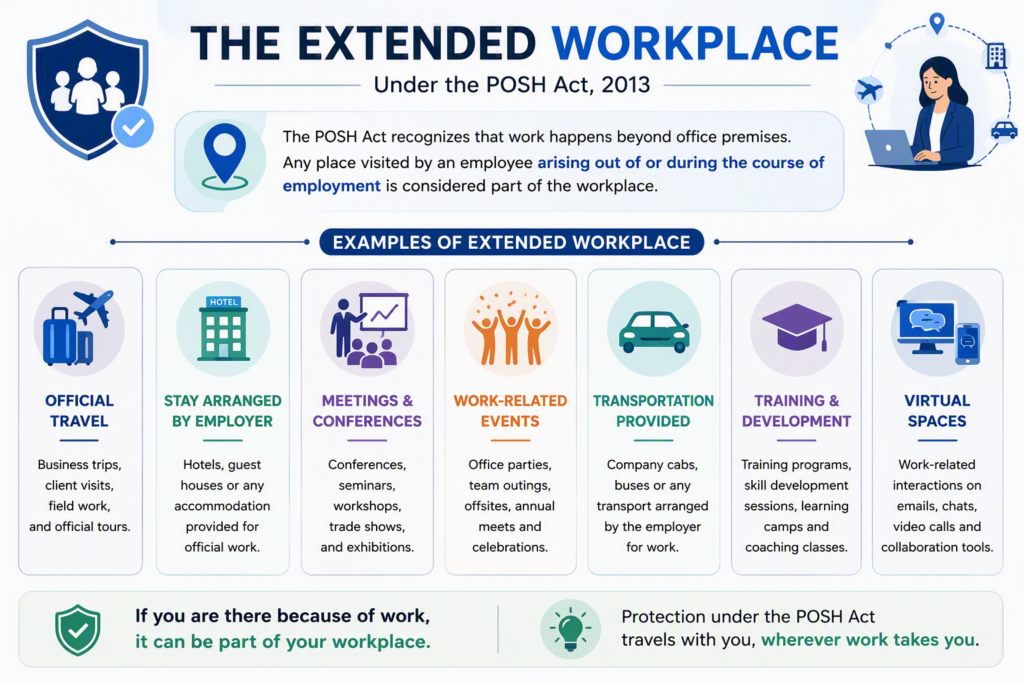
Perhaps the most surprising aspect of the POSH Act is the concept of the extended workplace. Despite being one of the most significant features of the law, many employees remain unaware of its existence.
The Act recognizes that employees frequently perform work-related tasks outside the office premises. Therefore, any place visited by an employee arising out of or during the course of employment may be treated as a workplace. This includes official travel, business visits, client meetings, conferences, seminars, offsite events, training programs, and transportation arranged by the employer.
Consider a situation where employees are attending an official conference in another city. Even though the incident may occur in a hotel lobby, conference venue, or employer-arranged transportation, it may still fall within the scope of the POSH Act because the employee is present there as part of official duties. Similarly, inappropriate conduct during a company offsite, annual gathering, or work-sponsored event can attract scrutiny under the law.
The concept has become even more relevant in the era of hybrid and remote work. A series of inappropriate messages sent through official communication channels or work-related messaging groups may also constitute workplace harassment. This demonstrates how the law has adapted to changing work realities and ensures that employees remain protected even outside conventional office boundaries.
Who is an Aggrieved Woman?
Another important concept under the POSH Act is that of an aggrieved woman. The law adopts an inclusive approach and recognizes the right of every woman to a safe workplace environment, regardless of age, designation, employment status, or nature of engagement.
An aggrieved woman may be a permanent employee, a temporary employee, a trainee, a consultant, an apprentice, a probationer, a contract worker, a volunteer, or even a visitor connected to the workplace. The law also extends protection to women who are engaged through contractors or agencies, whether their employment terms are express or implied.
What makes this definition particularly significant is that a woman does not necessarily need to be on the payroll of an organization to seek protection under the Act. A vendor representative, a consultant, an intern, a client visiting an office, or a woman working in a domestic setting may also be covered if the harassment is connected to a workplace.
This broad definition ensures that protection is linked to the experience of harassment rather than to a person’s job title or contractual status. The emphasis is on safeguarding dignity, safety, and equality for all women present within a workplace ecosystem.
Final Thoughts
The POSH Act is often viewed as a compliance requirement, but its true purpose goes much deeper. It is a law designed to uphold dignity, create safe working environments, and foster cultures built on mutual respect. Understanding who qualifies as an employee, who bears responsibility as an employer, who can be considered an aggrieved woman, and how broadly the law defines a workplace is essential for every organization and professional.
Perhaps the most important lesson from the Act is that workplace safety does not end at the office gate. Whether an employee is attending a conference, travelling for business, participating in a training program, working remotely, or commuting through employer-provided transportation, the protections of the POSH Act continue to apply. The concept of the extended workplace ensures that dignity and respect travel with employees wherever work takes them