
Creating a safe, respectful, and inclusive workplace is not just a legal requirement but a fundamental responsibility of every organization. The Prevention of Sexual Harassment (POSH) Act, 2013 was enacted to ensure that every woman has the right to work in an environment free from sexual harassment, intimidation, and discrimination.
Yet, many employees continue to struggle with identifying what constitutes sexual harassment and when workplace behavior crosses the line.This article explains the meaning, forms, and types of sexual harassment, helping employees and employers recognize inappropriate behavior and take timely action.
What is Sexual Harassment?
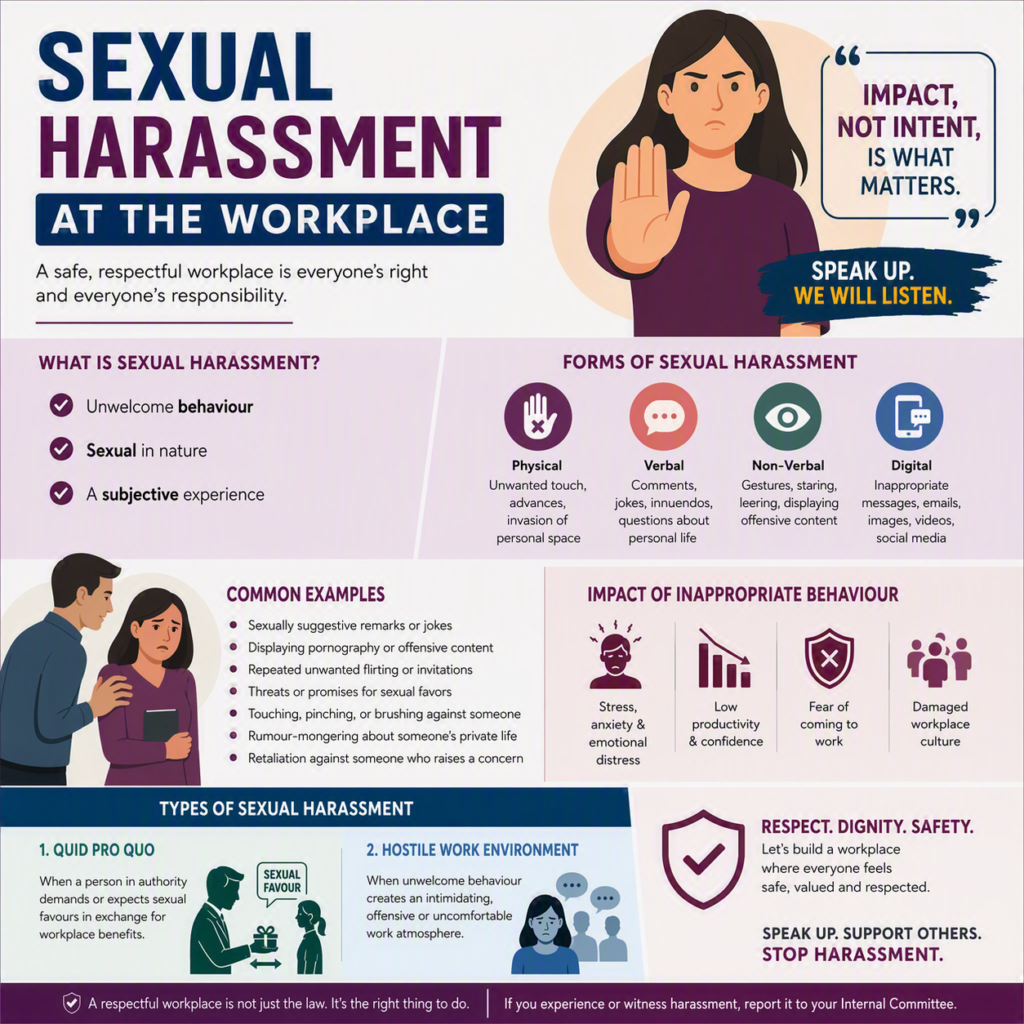
Sexual harassment refers to any unwelcome behavior of a sexual nature that makes a person feel uncomfortable, intimidated, humiliated, or unsafe.
The key elements are:
- The behavior is unwelcome
- The behavior is sexual in nature
- The recipient experiences it as offensive, intimidating, or uncomfortable
One of the most important principles under POSH is:
Impact matters more than intent.
A person may claim that they were “just joking” or “didn’t mean any harm,” but if the behavior creates discomfort or distress for another person, it may still be considered sexual harassment.
Forms of Sexual Harassment
The POSH Act recognizes various forms of sexual harassment, including but not limited to:
Physical Conduct
- Unwanted touching
- Physical advances
- Pinching, grabbing, or brushing against someone
- Invasion of personal space
- Attempting physical intimacy without consent
Verbal Conduct
- Sexually suggestive comments
- Remarks about someone’s appearance or body
- Sexual jokes and innuendos
- Questions about personal or intimate relationships
- Repeated flirtation after refusal
Non-Verbal Conduct
- Leering or staring
- Inappropriate gestures
- Displaying offensive images or posters
- Making sexually suggestive facial expressions
Digital and Online Harassment
- Sending inappropriate emails
- Sharing objectionable photos or videos
- Sexual messages through WhatsApp, social media, or SMS
- Sending unwanted romantic or suggestive content
Understanding “Unwelcome” Behaviour
Not every interaction between colleagues amounts to harassment. The deciding factor is whether the conduct is welcome or unwelcome.
Behavior becomes problematic when:
- The recipient does not appreciate it.
- The recipient feels uncomfortable.
- The conduct continues despite objections.
- The behavior creates fear, embarrassment, or humiliation.
Every individual has different personal boundaries. Respecting those boundaries is essential for maintaining a healthy workplace culture.
Common Examples of Sexual Harassment at Work
Sexual harassment can appear in many forms, including:
- Making sexually suggestive comments
- Sharing inappropriate jokes
- Repeatedly asking a colleague out after they decline
- Sending inappropriate messages
- Displaying explicit content in the workplace
- Threatening career consequences for rejecting advances
- Stalking or excessive monitoring
- Unwelcome social invitations with sexual undertones
- Retaliating against someone who raises concerns
Organizations must understand that harassment is not limited to physical acts. Words, gestures, messages, and conduct can be equally harmful.
Why Does Sexual Harassment Occur?
Workplace sexual harassment is often linked to:
Cultural Conditioning
People may adopt harmful attitudes and behaviors that have been normalized in society.
Abuse of Power
Individuals in positions of authority may misuse their influence to exert control over others.
Gender Stereotypes
Traditional beliefs and unequal power dynamics often contribute to inappropriate workplace behavior.
Lack of Awareness
Many incidents occur because individuals fail to understand personal boundaries and professional conduct expectations.
Building awareness and promoting respect are critical steps toward preventing harassment.
The Impact of Sexual Harassment
Sexual harassment affects far more than an individual’s comfort at work.
Victims often experience:
- Anxiety and stress
- Loss of confidence
- Reduced productivity
- Mental and emotional distress
- Reduced job satisfaction
- Fear of attending work
- Damage to professional reputation
Organizations that fail to address such behavior also risk:
- High employee turnover
- Low morale
- Reduced engagement
- Legal consequences
- Reputational damage
Two Major Types of Sexual Harassment
Under workplace harassment frameworks, sexual harassment is often classified into two categories.
1. Quid Pro Quo Sexual Harassment
The Latin phrase Quid Pro Quo means “something in exchange for something.”
This occurs when a person in authority demands or expects sexual favors in exchange for workplace benefits.
Examples
- Offering promotions in exchange for romantic or sexual involvement
- Promising better performance ratings
- Granting special assignments or opportunities
- Threatening poor evaluations for refusing advances
Practical Example
Consider a situation where a supervisor refuses to approve an employee’s project and later suggests that approval or favorable treatment will depend upon personal or sexual compliance.
In such cases, professional opportunities become linked to sexual expectations, which is a classic example of quid pro quo harassment.
2. Hostile Work Environment Sexual Harassment
A hostile work environment exists when repeated unwelcome behavior creates an intimidating, offensive, humiliating, or uncomfortable atmosphere for an employee.
Unlike quid pro quo harassment, hostile environment cases do not necessarily involve demands for sexual favors.
Examples
- Sexual jokes and comments
- Offensive songs or videos
- Persistent teasing
- Mocking employees who raise concerns
- Sexually charged conversations
- Vulgar language
Practical Example
Imagine an employee repeatedly objecting to colleagues playing songs with offensive sexual content during work hours. Instead of stopping, the colleagues mock and ridicule the employee.
Such behavior can create a hostile work environment because it interferes with the employee’s ability to work comfortably and professionally.
Creating Respectful Workplaces
Preventing sexual harassment is not solely the responsibility of HR or Internal Committees. Every employee plays a role in creating a safe workplace.
Employees should:
- Respect personal boundaries
- Think before speaking or messaging colleagues
- Avoid jokes or comments that may cause discomfort
- Speak up when witnessing inappropriate conduct
- Support colleagues who raise concerns
- Participate actively in POSH awareness programs
Leaders and managers must lead by example and foster a culture based on dignity, inclusion, and respect.
Final Thoughts
Sexual harassment is not always obvious. It can occur through comments, messages, gestures, abuse of power, or seemingly casual behavior that makes another individual uncomfortable. The most important question is not what the offender intended, but how the conduct affected the recipient.
Organizations that promote awareness, encourage reporting, and respond fairly to complaints build workplaces where employees feel safe, respected, and empowered to perform at their best.
A respectful workplace is not created by policy alone. It is created by everyday actions, accountability, and a commitment to dignity for all.



Leave a Reply